Trezor.io/Start – The Complete Guide to Setting Up Your Trezor Wallet Safely
As cryptocurrency adoption accelerates around the world, the importance of secure storage has never been more critical. Unlike traditional bank accounts, where banks retain control over passwords and account recovery, crypto ownership means you alone control your funds. That power comes with responsibility — if private keys are lost, stolen, or exposed, your digital assets can disappear forever.
That’s where hardware wallets come in. Among the most trusted and widely adopted brands are Trezor devices — known for transparent security, open-source philosophy, and reliable performance. To help users set up their wallets safely and correctly, Trezor provides an official starting point: Trezor.io/start.
This guide is designed for beginners and seasoned users alike. We’ll walk through what Trezor.io/start is, why it matters, how to use it step by step, and how it protects your cryptocurrency from common threats. By the end, you’ll understand how to confidently take control of your crypto using Trezor hardware and the official setup portal.
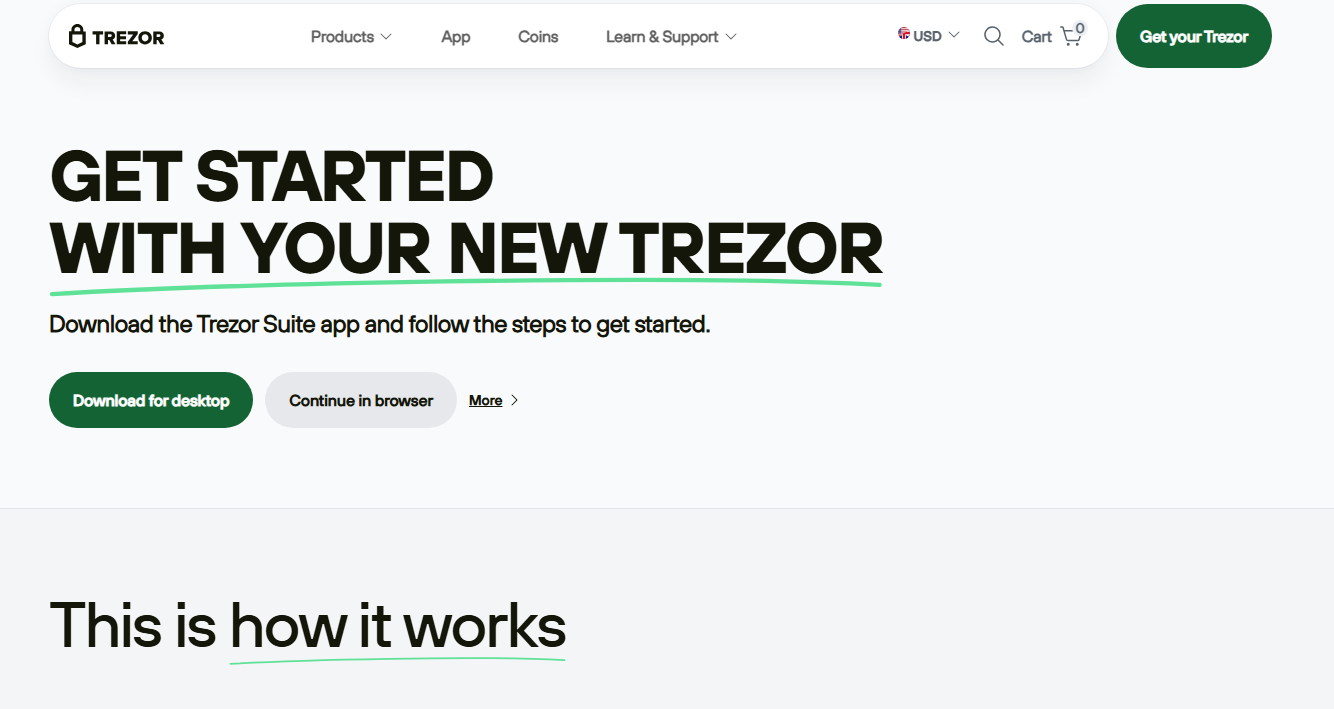
Trezor.io/start is the official onboarding and setup portal for Trezor hardware wallets. When you visit this link, you’ll be directed to verified downloads, step-by-step setup instructions, security best practices, firmware verification, and guidance for generating your recovery phrase securely.
Instead of blindly searching online for software or watchful tutorials — which can put you at risk of fake downloads and phishing sites — Trezor.io/start is the safest entry point to begin your wallet journey.
In traditional banking systems, institutions handle account recovery, password resets, and fraud prevention. But in crypto, no third party can reverse transactions or retrieve lost keys. Your private keys are the master key to your crypto.
If you mishandle your setup process — by using unofficial software, clicking scam links, or storing recovery phrases unsafely — the consequences can be permanent. Millions of dollars of crypto have been lost to:
• Phishing websites
• Fake wallet apps
• Improper backup practices
• Scammers posing as support agents
• Malware targeting keys and passwords
Trezor.io/start exists to make sure your first steps are correct, genuine, and secure.
Trezor hardware wallets are physical devices designed to store private keys offline, away from internet exposure. They operate with a secure chip and a simple interface that lets you approve transactions physically on the device — meaning even if your computer is compromised, your keys remain safe.
Two popular models are:
Trezor Model One – A reliable entry-level hardware wallet that supports Bitcoin and many major altcoins.
Trezor Model T – A premium variant with touchscreen interface, additional coin support, and advanced features.
Both start their setup process at Trezor.io/start.
The Trezor Suite is the official companion application for Trezor wallets. It allows you to manage your crypto, install firmware, create and organize accounts, send and receive funds, and interact with decentralized finance (DeFi) and NFTs.
Instead of downloading random wallet applications online — which may be fake or malicious — Trezor Suite is downloaded through the Trezor.io/start portal, ensuring authenticity and security.
Before you start the setup process, make sure you have:
• A Trezor hardware wallet (Model One or Model T)
• A computer with a USB port
• A stable internet connection
• A clean desk and secure place to write down recovery words
Avoid setting up your wallet on public or shared computers. Also, never set up your device using links from emails, messages, or social media.
Here’s how the official setup process works:
When you receive your Trezor wallet:
• Verify the box seal is intact
• Ensure there’s no pre-written recovery seed inside
• Check for signs of tampering or damage
Trezor devices should always generate the recovery phrase themselves — never rely on pre-written seed phrases.
Open a fresh browser and type trezor.io/start. Do not click links in random web pages, ads, or messages — many of these are phishing attempts.
Through Trezor.io/start, download the official Trezor Suite app for your operating system (Windows, macOS, Linux). This application will guide you through firmware updates, wallet setup, and ongoing use.
Use the included USB cable to connect your Trezor wallet to your computer. Older desktop users may need adapters; follow onscreen instructions carefully.
Once connected, Trezor Suite will detect your device and begin the setup workflow.
If your device doesn’t have the latest firmware, Trezor Suite will prompt you to update it. Firmware updates include security improvements and new features — always install them.
Never skip firmware updates — they ensure your wallet runs the most secure code available.
Trezor Suite will ask whether you want to:
• Create a new wallet
• Recover an existing wallet
Choose “Create new wallet” if this is your first device. You will then be shown your recovery seed words — usually 12, 18, or 24 words depending on your model and preferences.
This is the MOST important step. Your recovery seed is the backup key to your crypto. Write it down clearly and store it offline in a secure place. Do not take pictures, type it on your computer, or share it with anyone.
Write your seed on paper, metal plates, or another offline method that is resistant to fire and water damage.
Trezor Suite will ask you to confirm several words from your seed to ensure you copied it correctly.
Take your time — any mistake here could lock you out of your crypto forever.
After confirming your seed, you can create accounts for the cryptocurrencies you hold — Bitcoin, Ethereum, Litecoin, XRP, and many others. Trezor Suite allows you to see balances, transaction history, and manage multiple accounts.
There are many fake wallet downloads and phishing pages online designed to trick users into entering seed phrases or downloading malicious software. Trezor.io/start protects you by:
• Delivering official app downloads
• Verifying firmware integrity
• Walking you through each secure setup step
• Providing safety warnings at points of risk
• Eliminating guesswork from the onboarding process
Starting at unofficial links or random search results can lead to fake wallet software that steals private keys or records recovery phrases.
Trezor wallets protect your assets using multiple layers of security:
Offline Private Key Storage – Keys never leave the device.
Physical Button Confirmation – Transactions must be approved physically on the wallet.
Open-Source Software – Independent experts can verify the code.
PIN Protection – Your device is protected by a user-set PIN.
Passphrase Support – An optional extra layer of security beyond the recovery seed.
Together, these features make it extremely difficult for hackers to access your funds.
Even with secure hardware, users can make mistakes. Here’s what to avoid:
Never capture your recovery phrase with screenshots, photos, cloud storage, or note apps. That immediately nullifies the security benefits of a hardware wallet.
No legitimate support agent, exchange representative, or trusted friend should ever ask for your seed phrase or PIN. If anyone does, treat it as a scam.
Download Trezor Suite only from Trezor.io/start. Third-party sources may contain malware.
Firmware updates improve security and compatibility. Always install them when prompted.
While memorizing your seed phrase might sound convenient, you must also have a secure physical backup. Memory fails — physical backups do not.
Your crypto isn’t stored on the device. It lives on the blockchain. Your Trezor merely holds the keys.
If the device is lost or damaged:
Your funds will be restored instantly on the new device.
This is why keeping your recovery seed safe is more important than keeping the physical wallet itself.
Thieves cannot access your assets without:
• The device
• Your PIN
After multiple incorrect PIN attempts, the device locks and may wipe itself.
If theft is suspected, use your recovery seed to restore your wallet on a new device and — if you use an optional passphrase — set a new passphrase.
Once set up, Trezor Suite offers a range of tools:
Multi-Asset Management – Handle Bitcoin, Ethereum, and hundreds of other coins and tokens.
Portfolio Overview – Track your asset balances in one dashboard.
Transaction History – See your activity at a glance.
Integration with Third-Party Services – Use with DeFi interfaces, swap services, and external wallets.
Passphrase Protection – Add an additional secret word to your seed for more security.
These features help you interact with the crypto ecosystem without exposing private keys.
FeatureTrezor Hardware WalletSoftware WalletPrivate keys offlineYesNoProtection from malwareVery highModeratePhishing resistanceHighModerateBest for long-term storageYesLimitedEmergency recoveryYesDepends on user
Hardware wallets like Trezor remain the most secure self-custody solution available today.
Trezor Suite performs an authenticity check. It verifies:
• Device firmware signature
• Hardware legitimacy
• Tamper resistance
Always buy Trezor devices from official sources or authorized retailers — not second-hand, auction sites, or unauthorized resellers.
To maximize protection:
• Bookmark Trezor.io/start
• Never enter your seed phrase online
• Use a strong PIN
• Store backups in secure physical locations
• Consider fireproof and waterproof backup tools
• Enable passphrase protection if needed
Security is not a one-time setup — it’s an ongoing practice.
Is Trezor.io/start free to use?
Yes — the setup portal and Trezor Suite downloads are free.
Can I use Trezor with my phone?
Yes — Trezor works with supported mobile interfaces through compatible apps and integrations.
Does Trezor support many coins?
Yes — Trezor supports hundreds of cryptocurrencies and tokens.
Can I use Trezor without Trezor Suite?
Yes — third-party wallets can connect to Trezor, though Trezor Suite is recommended for secure setup.
Is Trezor hack-proof?
No system is 100% immune, but Trezor’s hardware security model dramatically reduces attack vectors compared to hot wallets.
Trezor.io/start is ideal for:
• Beginners entering crypto
• Long-term holders
• NFT collectors
• Traders wanting secure storage
• DeFi participants
• Anyone serious about self-custody
Whether you hold $100 or $100,000, secure key management matters.
Trezor is trusted for:
• Open-source design
• Transparent security model
• Strong community adoption
• Reliable firmware updates
• Proven track record since early crypto days
The Trezor ecosystem combines security and flexibility in a user-friendly way.
Securing your cryptocurrency starts with a safe setup. Trezor.io/start ensures that your wallet initialization, firmware verification, and recovery seed process are genuine, secure, and mistake-free.
By using the official portal, avoiding phishing links, and following recommended practices, you take crucial steps to protect your digital wealth. With your keys stored offline and your recovery seed backed up securely, you can interact with crypto confidently — knowing your assets are safe.